The Sokoine University of Agriculture (SUA) is proud to celebrate Dr. Ngalameno Mungo Kisinza, from the Department of Veterinary Anatomy and Pathology, for his significant contribution as a co-author to a groundbreaking research paper published in the esteemed journal Nature.
A further mark of the study’s significance is that the paper has been featured on the cover page of Nature, highlighting the international scientific importance and visibility of this research.

The paper, titled “A queen odour mediates reproductive suppression in eusocial mammal,” presents important new findings on how naked mole-rat queens regulate reproduction within their highly organized colonies.
This notable research is the result of an international collaboration involving researchers from South Africa, Germany, the United States, France, and the Czech Republic. The research team discovered that queens of naked mole-rat colonies release a volatile compound called isopropyl myristate, which induces temporary infertility in other females within the colony.
Remarkably, the effect occurs even when the queen is absent and the animals are exposed only to her scent. The researchers found that isopropyl myristate increases levels of prolactin, a hormone associated with reduced fertility in mammals, while maintaining low levels of progesterone, a hormone that promotes fertility.
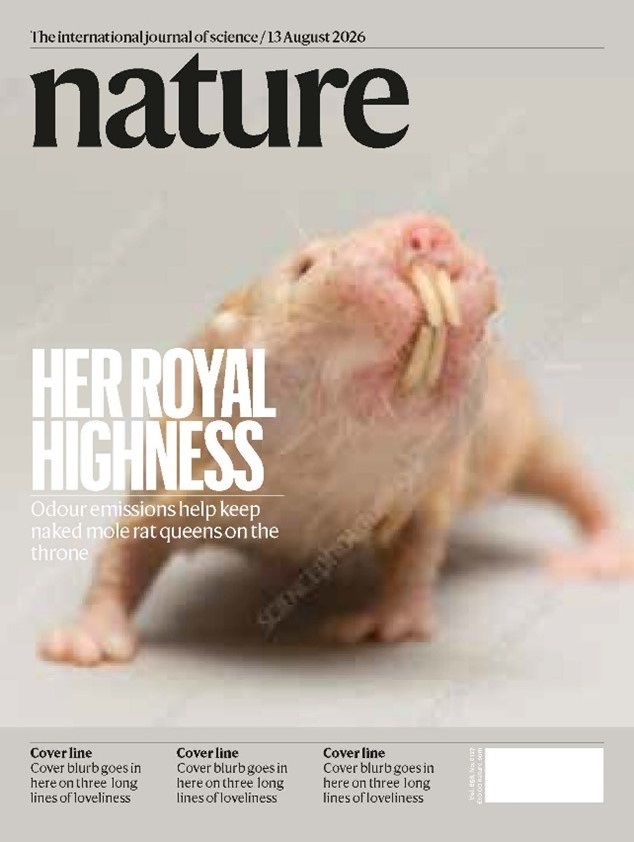
This chemical mechanism helps explain how naked mole-rats maintain their distinctive social structure. They are among the very few eusocial mammal species that live in highly organized colonies resembling those of bees and ants, where a single breeding queen occupies the top of the reproductive hierarchy while numerous non-breeding workers cooperate to gather food, care for young, and perform other tasks that benefit the colony.
An intriguing aspect of the discovery is that isopropyl myristate is commonly used in cosmetics as a solvent and moisturizing agent. Although it is odorless to humans, the compound appears to be a remarkably powerful reproductive signal in naked mole-rats.
The publication and its prominent Nature cover feature represent an important achievement for SUA and underscore the university’s growing contribution to internationally significant scientific research. Dr. Kisinza’s involvement in this work further demonstrates the value of collaborative research and the contribution of Tanzanian scientists to advancing knowledge in animal biology, physiology, and reproductive science.
Share this page


