Pig farming has emerged as one of the fastest-growing agricultural sectors in Tanzania, recognized for its potential to boost household income within a short period.
Despite this potential, many farmers continue to face significant setbacks due to disease outbreaks, poor nutrition, and a lack of professional expertise.
MOROGORO | May 6, 2026
Empowering Livestock Farmers: SUA Leads the Way in Professional Pig Farming Initiatives
Pig farming has emerged as one of the fastest-growing agricultural sectors in Tanzania, recognized for its potential to boost household income within a short period.
Despite this potential, many farmers continue to face significant setbacks due to disease outbreaks, poor nutrition, and a lack of professional expertise.
To address these gaps, the Institute of Continuing Education (ICE) at Sokoine University of Agriculture (SUA) has launched a specialized training program.
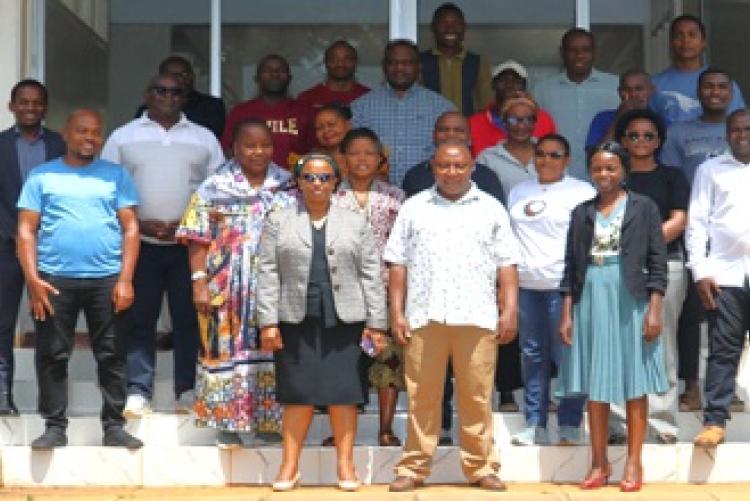
This initiative brings together experts, seasoned farmers, and aspiring entrepreneurs from eight regions across Tanzania to institutionalize best practices in piggery.
Speaking on behalf of the SUA Vice-Chancellor, Professor Raphael Chibunda, the Director of ICE, Dr. Devotha Mosha, emphasized that pig farming plays a vital role in elevating household economies and ensuring food security.
Dr. Mosha advised livestock keepers in all sectors including poultry and rabbit farming to seek foundational training before investing.
She noted that professional knowledge is the key to meeting income goals and sustaining long-term food security.
During the sessions, livestock expert Professor Faustine Lekule identified four primary challenges currently hindering the sector, incurable diseases such as African Swine Fever, the high cost and low quality of feed, inadequate farmer education, and market inconsistencies.
According to Professor Lekule, the training is designed to provide participants with a deep understanding of modern techniques, ranging from optimized nutrition and breeding to efficient farm management.
The impact of the program is already being felt by participants like Anastasia Seleli, who attended to prepare for her upcoming entry into the business.
She noted that while she arrived with limited knowledge, the insights gained surpassed her expectations, providing her with a clear roadmap for a productive venture.
Similarly, Blasius Kigeso from Dodoma shared that his motivation was driven by the recurring challenge of diseases and the absence of professional skills.
He observed that many farmers rely on trial and error, whereas this training offers a professional foundation to minimize losses and maximize efficiency.
Overall, the program provides a platform for participants to explore modern farming innovations, such as selecting superior breeds and utilizing advanced reproduction methods like artificial insemination.
Furthermore, the introduction of digital technology, including the use of cameras for livestock monitoring, was highlighted as a transformative tool for improving meat quality and accelerating animal growth.
Sokoine University of Agriculture continues to stress the importance of professional education as a prerequisite for sustainable farming.
By bridging the gap between traditional methods and scientific innovation, the institution aims to ensure that livestock projects remain beneficial to both individual households and the national economy.
Share this page


